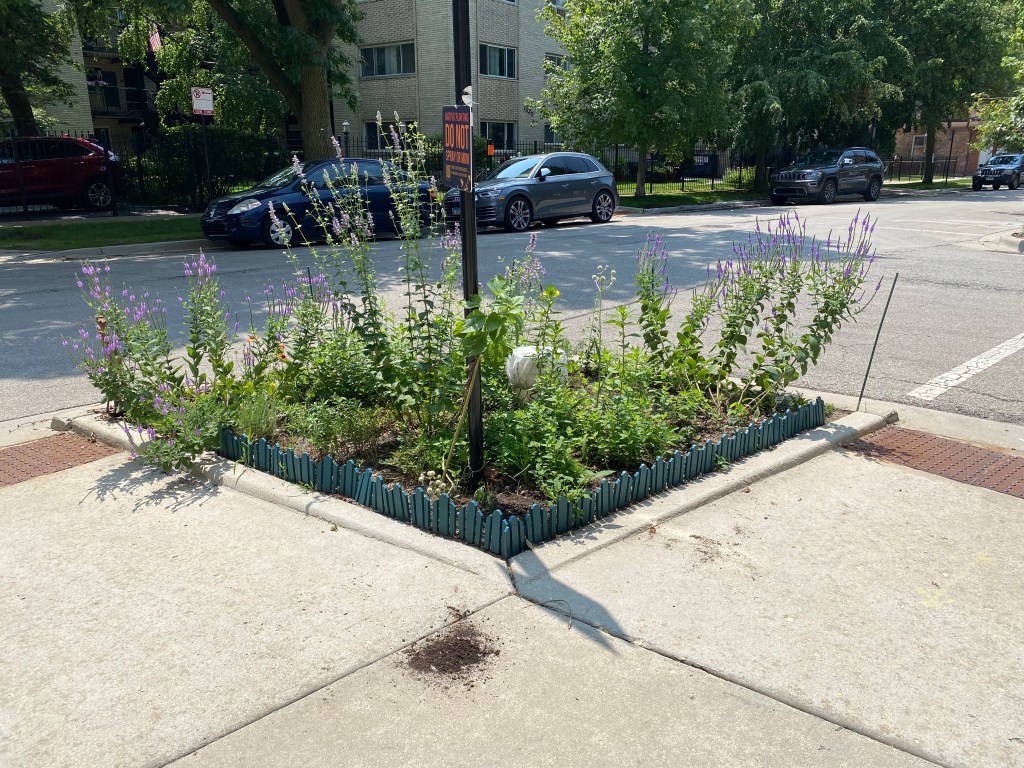
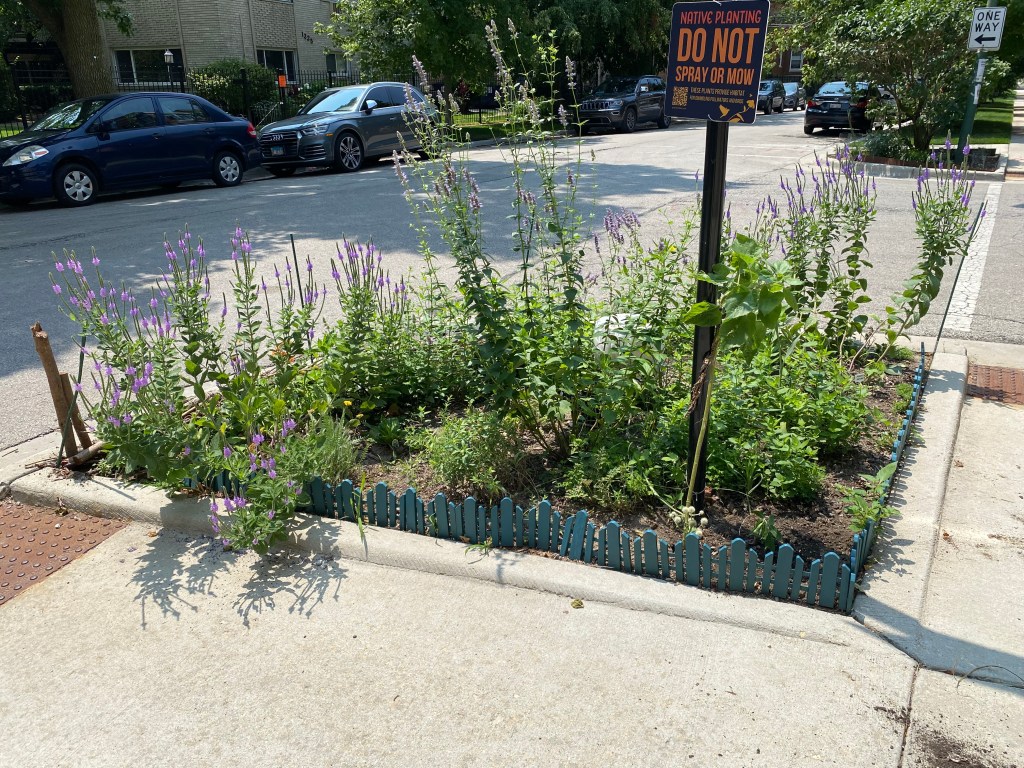
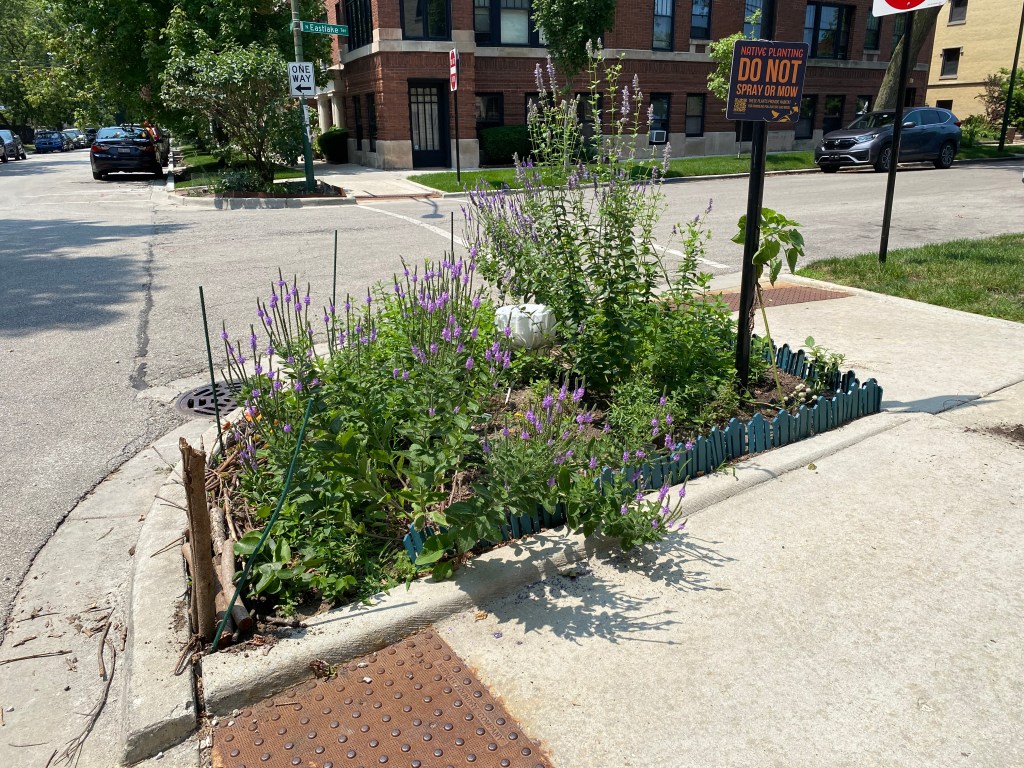
In March when I pulled up the burlap protecting the soil from salt, I noticed that there were still dried seeds on the anise hyssop (Agastache foeniculum). I crumbled the flower heads around the corner plot hoping that maybe some of them would grow. I was not disappointed. In fact, there were so many green sprouts that it made it difficult for me to weed at the beginning of the season, since I couldn’t identify who was friend or foe. I really shouldn’t have worried as they became like a green mulch, which shaded the soil so that it stayed moist instead of the full sun drying it out.
But now my problem is how well they are thriving throughout the bed. Because it’s a parkway garden, that means that the plants are growing close to the curb. I’ve been mindful as I planted to keep the tallest plants farthest from the street so that they won’t obstruct the view of anyone driving. And this hyssop grows to be four feet tall. Definitely an obstruction. So I posted earlier this week in two facebook Rogers Park groups offering up plants. As of writing, four neighbors have expressed interest. So this morning I went out with my shovel to grab a few while also making room for four more plants that Jared had given me. A Western sunflower (Helianthus occidentalis) to replace those the rabbits had eaten and three types of milkweed, the whole inspiration for the garden, and one of the species I’ve had the most difficulty keeping alive. Hopefully the butterfly weed (Asclepias tuberosa), common milkweed (Asclepias syriaca), and whorled milkweed (Asclepias verticillata) will thrive in their new home.
I hope I’m not jinxing it, but even with taking quite a few hyssop plants out, I was running out of space for new plants. Every spot I considered already had someone growing there, though some of them are still quite young and vulnerable.
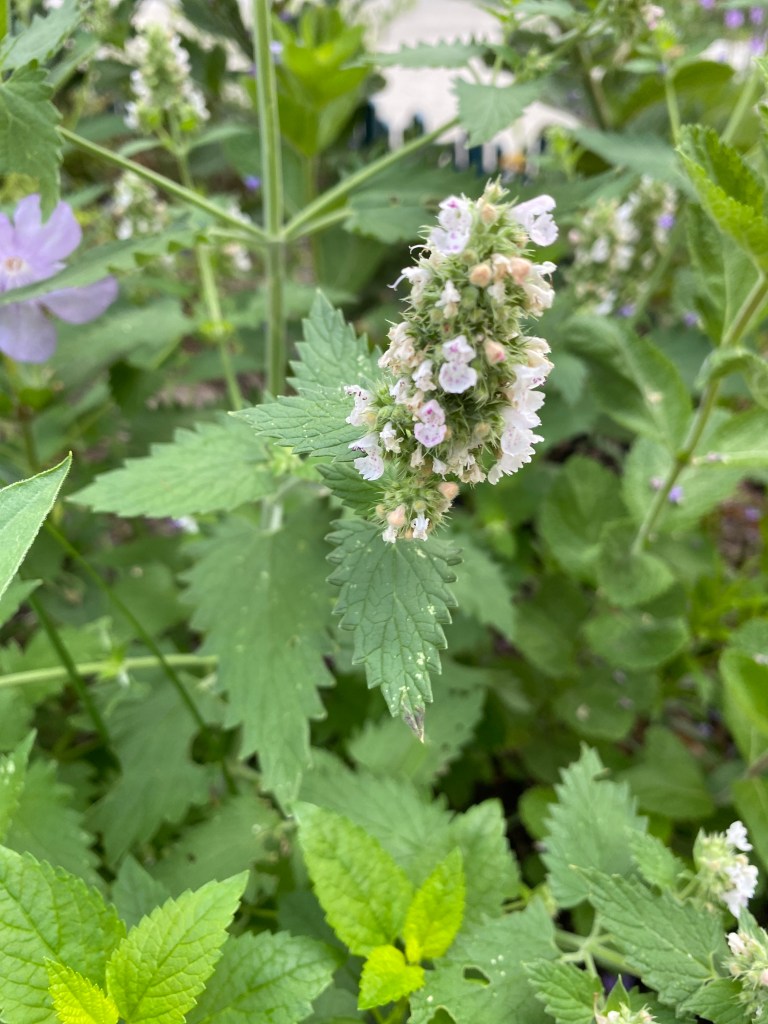
There is a spot I need to take a closer look at. When I first looked at it, I thought that something had caused the flowers on the young hyssop to take on a pink hue, but after using PlantNet I realized that one of the plants thriving is actually catnip (Nepeta cataria). Catnip is considered invasive in many regions. Whether its invasive in Illinois or not, I’ll be removing it because of how aggressive it is. As part of the mint family, it can outgrow and take resources from the young plants that I’ve intentionally added. I considered bringing it indoors for my cat to make use of but since I don’t know if the plot has any heavy metals, I’m not going to risk it.
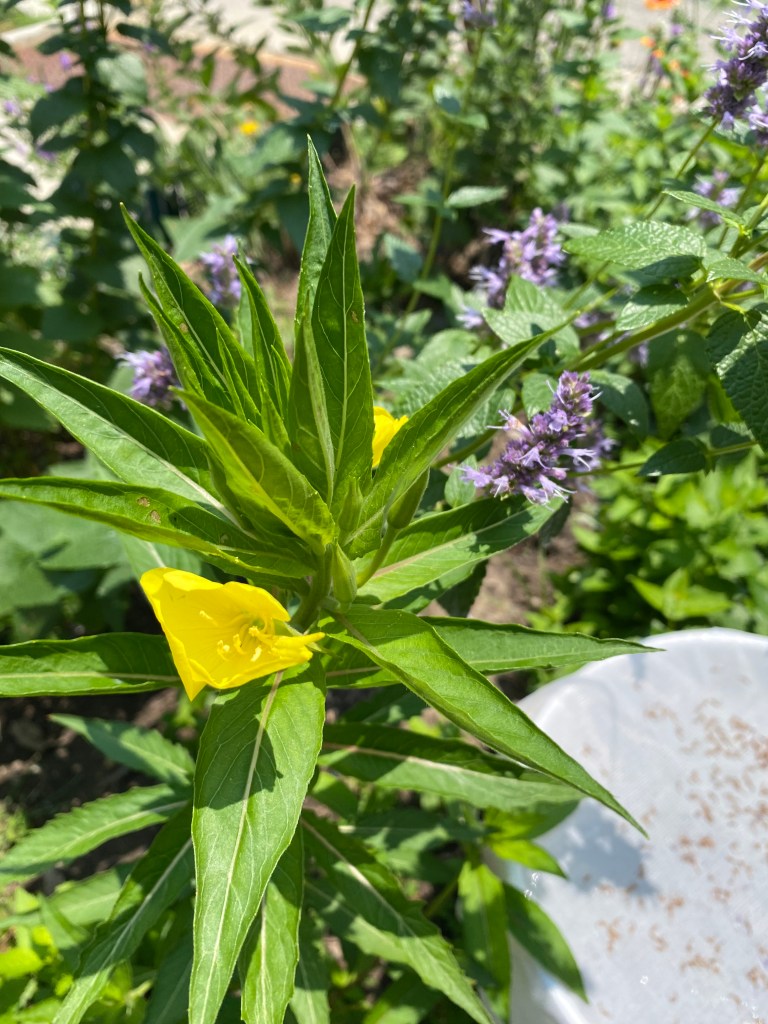
Not all volunteer plants are removed. The firewheel (Gaillardia pulchella) that showed up continues to pop against the hoary vervain (Verbena stricta) and I decided to leave the many common evening primrose (Oenothera biennis) plants that have sprung up as well. Though I plan to trim their height regularly as they can reach 7 feet tall.

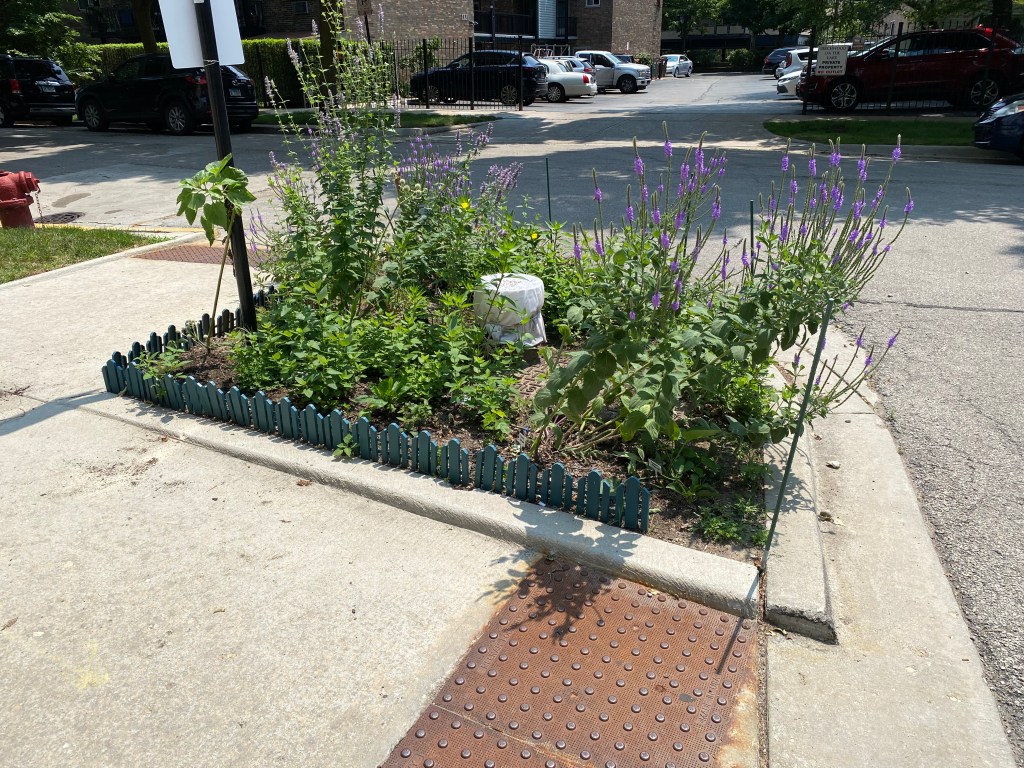
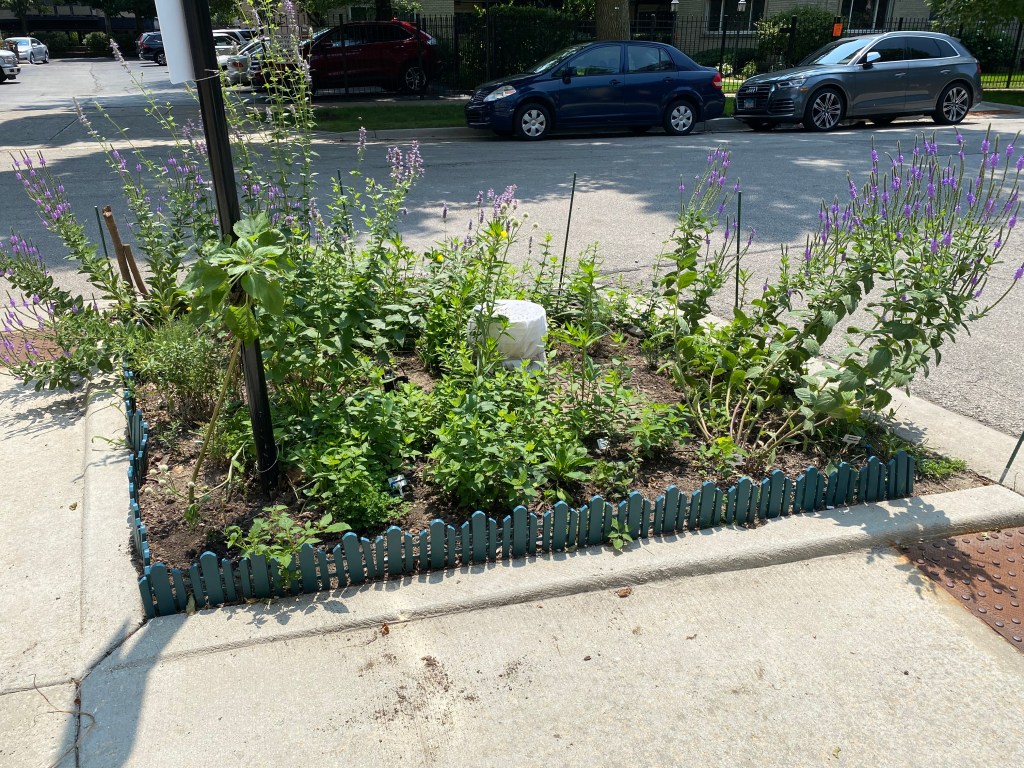

 Birchwood Butterfly Corner