Help us turn Rogers Park into a wildlife corridor!
“Wildlife corridors are connections across the landscape that link up areas of habitat. They support natural processes that occur in a healthy environment, including the movement of species to find resources, such as food and water.” – Australian Government, Department of Climate Change, Energy, the Environment and Water
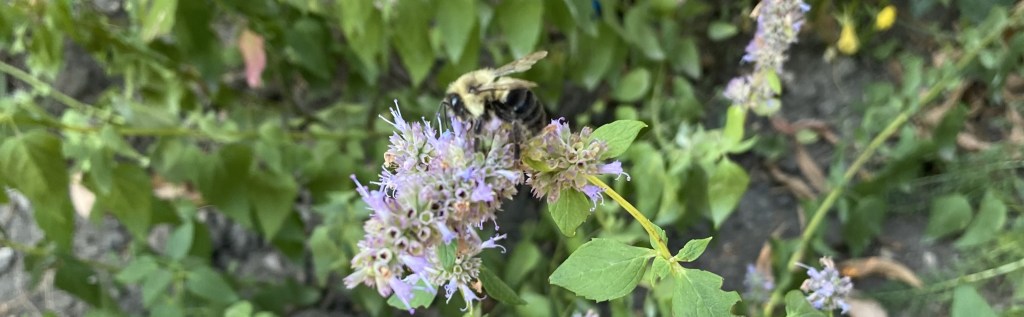
Did you know that some native bees only travel as far as 50 feet to forage for food? Imagine drawing a 50-foot circle around your front door—would there be a place for them to stop and feed? Would you like there to be? Over the past few decades, pollinator populations have drastically declined, largely due to the loss of their natural habitats.
But we live in a city, what can we do to help? Studies show that even small, privately owned patches of land can link together for a larger wildlife habitat. Many of us don’t have yards to create native gardens, but we do live near street corners. Currently, these corners are often filled with sad looking grass, asphalt, and debris. But these spaces can be transformed into vital stops along an urban wildlife corridor.
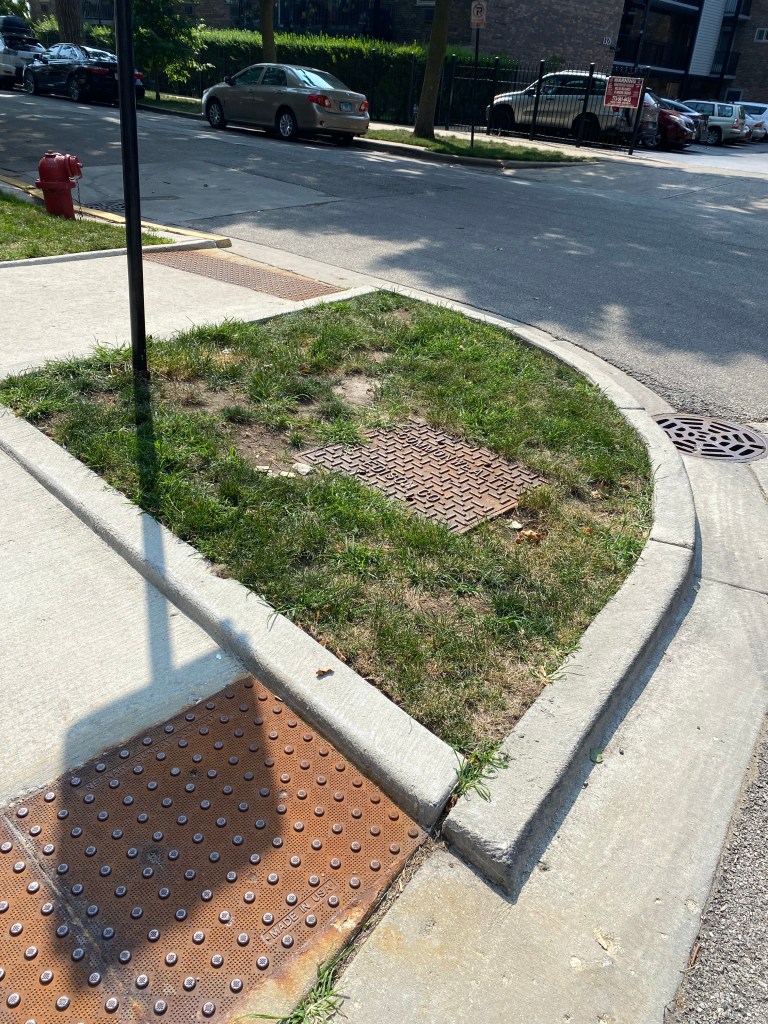

In 2025, my goal is to map available street corners and connect with neighbors interested in caring for them. Creating these native corner gardens offers additional benefits, such as “reducing flood risk, improving air quality, and countering the urban heat island effect”.
Are you interested in caring for a native corner garden? I’d love to hear from you! If you can’t tend to a garden yourself, you can still contribute by helping map existing gardens and identifying potential sites for new ones. Use this form to get involved: https://forms.gle/ZRzHQNvBwrHRX7Zt6
 Birchwood Butterfly Corner